




Why This Vitamin Becomes So Important Now
When estrogen declines, your bones lose some of their natural protection. That’s one reason osteoporosis risk goes up after menopause. Vitamin D helps your body absorb calcium and keep that precious bone density intact. But it’s not just about your skeleton. Vitamin D also supports the hormones that keep your mood balanced, helps regulate sleep, and even plays a part in reducing hot flashes.
Think of it as a quiet behind-the-scenes helper, keeping everything running a little smoother while your hormones are doing somersaults.


How Low Vitamin D Can Make Menopause Feel Worse
Here’s where things get tricky: many menopause symptoms can be made worse if you’re running low on vitamin D. Some of the big ones include:
• Bone loss and fractures
– When estrogen dips, your body absorbs less calcium, so bones weaken faster.
• Hot flashes
– Women with low vitamin D levels often report more frequent and intense ones.
• Mood changes and poor sleep
– Because vitamin D helps produce serotonin (that happy hormone), being
low can lead to more anxiety, irritability, and sleepless nights.
• Heart health issues
– Deficiency can stiffen arteries and raise blood pressure over time.
Sound familiar? It’s not always easy to tell whether these symptoms are from menopause or vitamin D deficiency which is why testing can be so helpful.


The Hidden Signs You Might Be Low
Even outside of menopause, a vitamin D deficiency can leave you feeling off. You might notice things like:
Because these overlap with menopause symptoms, many women never realize vitamin D might be part of the issue. A simple blood test can tell you exactly where you stand.
Hormones and Vitamin D: A Complicated Relationship
Estrogen actually helps your body use vitamin D properly. When it drops, your vitamin D receptors don’t work as efficiently, which means your body absorbs less calcium from food. It’s one of those subtle chain reactions that explains why bone loss and fatigue become more noticeable during menopause.
Keeping your vitamin D levels up is one of the easiest ways to protect yourself. It supports your bones, boosts your immune system, and helps stabilize mood during all these hormonal shifts.
Hot Flashes and the Vitamin D Connection
Hot flashes are one of the most talked-about symptoms of menopause, and there’s growing evidence that vitamin D plays a role in how severe they get. Women with healthy levels tend to have fewer and milder flashes.
Researchers think vitamin D might help by calming inflammation and supporting the part of your brain that regulates temperature and hormones. So while it won’t make hot flashes vanish overnight, it can make them a lot more manageable.
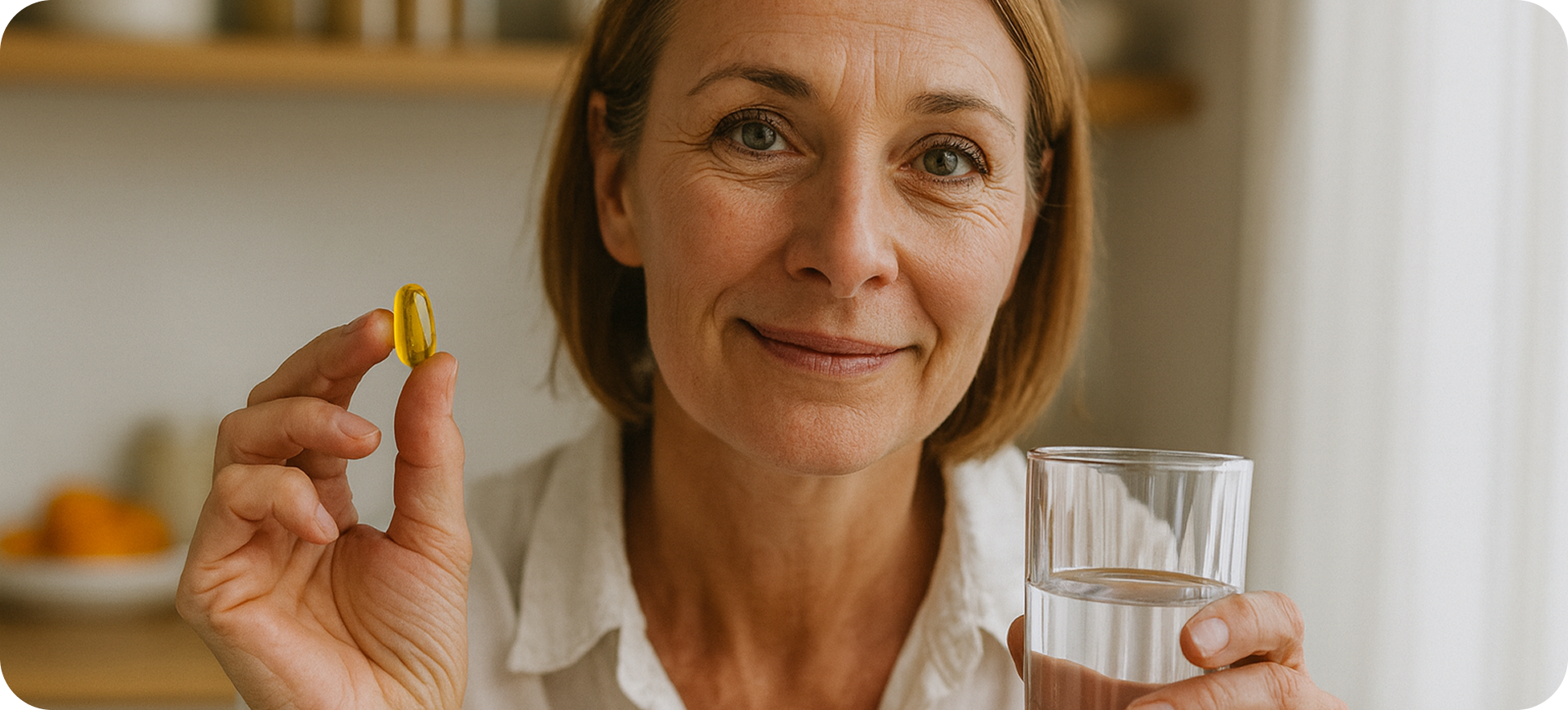
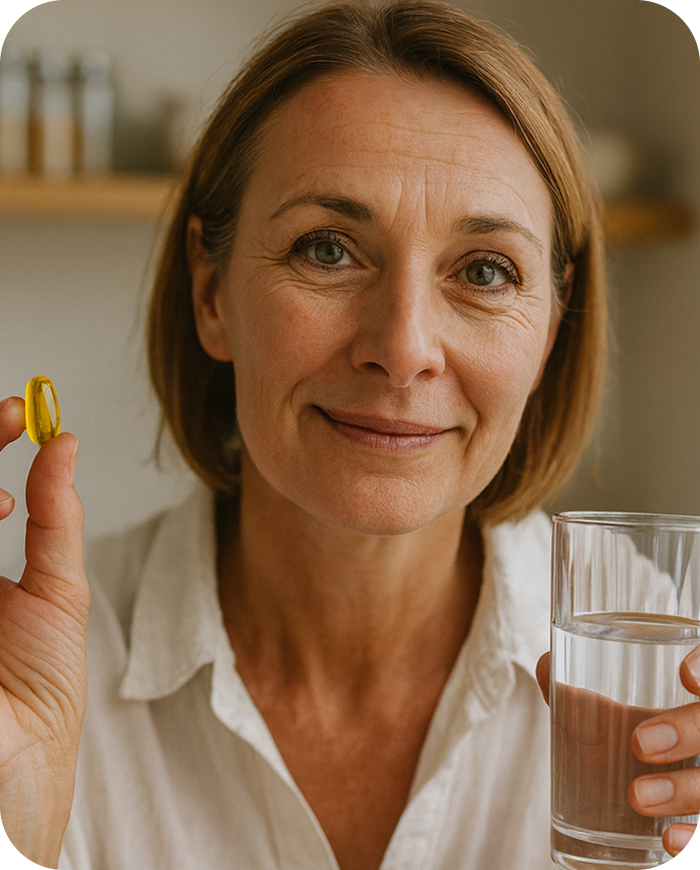
Calcium and Vitamin D: The Power Couple
Calcium and vitamin D are like best friends: one doesn’t work properly without the other. Vitamin D helps your body actually use the calcium you eat, which keeps your bones strong and healthy. Without it, calcium just passes through without doing much good.
Together, they help rebuild bone tissue, keep muscles functioning well, and lower fracture risk. It’s one of those simple combos that pays off for years to come.
Keeping Your Immune System and Energy Up
Menopause can sometimes leave you feeling run-down. Vitamin D supports your immune system and helps control inflammation, which can make you feel more energetic and resilient. If you’ve noticed you’re catching colds more often or just not bouncing back as easily, checking your vitamin D levels is a smart move.
How Much Vitamin D Is Enough?
Everyone’s needs are a bit different, but here’s a general guide:
• Perimenopause (late 30s to early 50s):
around 600 IU per day
• Menopause (50s–60s):
about 600 IU per day
• Postmenopause (70s and up):
closer to 800 IU per day
If your blood work shows a deficiency, your doctor might suggest higher doses for a short while. Just don’t go overboard. Too much vitamin D can cause problems, too.
And don’t forget about calcium . After menopause, most women need around 1,200 mg a day , whether through food or supplements.


Where to Get It
You don’t have to overhaul your life to boost your vitamin D. Here are the main sources:
1. Food:
Fatty fish (like salmon, tuna, or mackerel), egg yolks, fortified dairy, and cereals all provide a healthy dose.
2. Sunshine:
Ten to thirty minutes of sunlight a few times a week helps your skin make vitamin D naturally. Just remember your sunscreen!
3. Supplements:
Vitamin D3 is your best bet. It’s well absorbed and easy to add into your routine if you’re not getting enough from food or sun.
Wrapping It Up
Keeping your vitamin D levels healthy is one of the simplest ways to support yourself through menopause. It won’t solve everything, but it can make a noticeable difference in how you feel. It can affect your energy, mood, and even how your body handles stress.
This is about giving your body what it needs to stay strong for the long haul. If you’re unsure where you stand, ask your doctor to check your levels. Sometimes the smallest changes make the biggest difference.