




Hair thinning and increased shedding often become more noticeable as women enter perimenopause and menopause. Shifting hormone levels can gradually affect the hair’s thickness and volume. Many women begin to see a wider part, more strands in their brush, and a slow but steady loss of fullness.
This type of thinning is called female pattern hair loss (FPHL). It is the most common cause of hair loss among women. Although it progresses gradually, it can be difficult to reverse without intervention. For many women, these changes can affect confidence and day to day well-being.
Minoxidil is one of the most frequently recommended treatments for FPHL. It is available in two main forms. One is applied directly to the scalp, and the other is taken as a low dose pill. Both forms have their own advantages. Recent studies have led to increased interest in comparing the two.
The sections below explain how each type works, what benefits they offer, possible side effects, and how to determine which option may be most suitable.
Forms of Minoxidil
Minoxidil encourages hair growth in all of its forms, although the mechanisms and ways of using each version differ.
• Topical minoxidil
comes in liquids, foams, serums, and sprays.
• Oral minoxidil
is taken as a tablet, usually at doses between 0.25 mg and 2.5 mg per day.
• Sublingual minoxidil
is an emerging option placed under the tongue for improved absorption.
This form is still being studied and is not widely available.
Topical Minoxidil for Women
Topical minoxidil has been a standard treatment for female pattern hair loss for decades. Dermatologists continue to recommend it as the first option because it is easily accessible and strongly supported by clinical research.

How It Works
When applied to the scalp, topical minoxidil helps widen blood vessels. This increases circulation around the follicles and improves the delivery of oxygen and nutrients. The improved environment helps revive shrinking follicles and promotes a longer growth phase. The medication also activates potassium channels and may influence genes related to hair production.
How to Apply
Topical minoxidil should be applied to a clean and dry scalp using the dropper or foam applicator. The goal is to reach the scalp directly rather than the strands of hair. The product should be completely dry before styling or adding other hair products.
Benefits and Expected Results
Topical minoxidil can slow excessive shedding and increase hair density over time. Many women see visible regrowth along the part line or at the crown.
Most studies show improvements beginning around the four to six month mark. Results continue to build with regular use. Early and consistent application provides the best outcomes.
Side Effects and Safety
Topical minoxidil is well tolerated by most women, although some may experience:
Propylene glycol, which is present in many liquid solutions, can cause irritation for some people. Using a foam version, which is free of propylene glycol, often reduces these reactions.
Topical minoxidil is considered safe for long term use. However, it must be used continuously because new growth typically falls out within several months of stopping treatment.
Oral Minoxidil for Women
Oral minoxidil was originally prescribed to treat high blood pressure. Doctors later noticed that many patients experienced increased hair growth. This eventually led to the use of low dose oral minoxidil as an off label treatment for FPHL. It is especially helpful for women who have difficulty tolerating or sticking with topical applications.


How It Works
The oral form increases blood flow to the follicles and encourages hairs to shift into the active growth phase. Unlike topical minoxidil, which is activated mainly through enzymes on the scalp, oral minoxidil is processed through enzymes in the liver and blood platelets. This allows for more efficient systemic activation.
Dosing and Usage
The most common starting dose for women is between 0.25 mg and 1 mg daily. Some women may use up to 2.5 mg under medical supervision. The medication is usually taken once a day, with or without food.
Because it is a prescription medication, routine monitoring with a healthcare provider is recommended. Adjustments to the dosage may be needed based on individual response.
Benefits and Expected Results
Oral minoxidil can increase both hair density and shaft thickness. It is particularly helpful for women who did not see improvements from topical treatment. Although topical minoxidil remains the best studied and most consistently effective option, oral formulations offer a simpler routine and strong results for many people.
Many dermatologists now consider low dose oral minoxidil suitable as a first or second treatment choice depending on a patient’s situation and preferences.
Side Effects and Safety
Because oral minoxidil affects the entire body, potential systemic effects include:
Serious side effects such as significantly low blood pressure or rapid heart rate are uncommon at low doses. Regular check-ins with a doctor help ensure safe use.
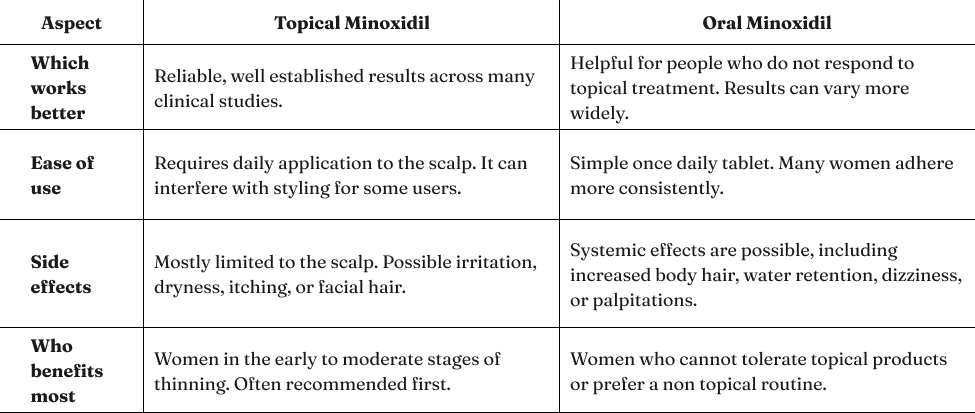
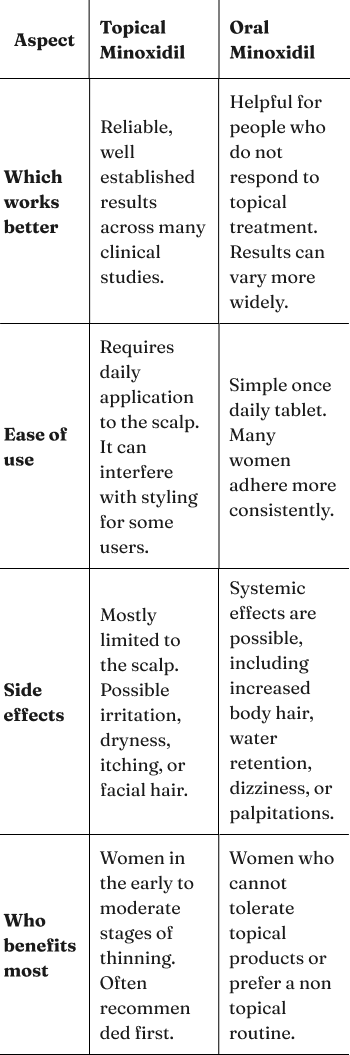
Topical and Oral Minoxidil Compared Side by Side
Aspect
Topical Minoxidil
Oral Minoxidil
Which works better
Ease of
use
Side
effects
Who benefits most
Important Considerations for Women: Safety, Hormones, and Combination Options
Selecting the right treatment involves considering hormonal status, overall health, and long term safety.


Hormonal Factors
Minoxidil does not affect hormone levels. This makes it a safer option compared to medications such as finasteride and dutasteride, which directly impact androgen activity. Because many women experience hair loss related to hormonal changes such as menopause, PCOS, or postpartum shifts, healthcare providers may still evaluate hormone levels before starting treatment.
Sexual Side Effects
Minoxidil is not associated with changes in libido or sexual function. This often makes it more appealing to women who want to avoid hormonal disruption.
Combination Therapies
For women whose hair loss has multiple causes, combining minoxidil with other treatments can improve results. Common pairing options include:
• Spironolactone
which lowers androgen influence and can be helpful for women with androgen sensitive hair thinning.
• Nutritional support
including iron, vitamin D, and biotin. Adequate levels support oxygen
delivery, keratin production, and healthy follicle cycling.
• Low level laser therapy (LLLT)
which uses gentle light to stimulate follicles, improve circulation,
and reduce inflammation. This approach is particularly helpful for crown
or part line thinning.
Combination treatments should always be guided by a healthcare professional.
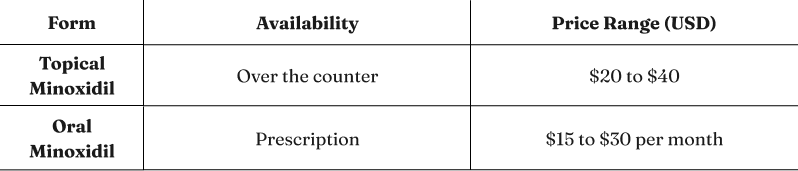
Cost Comparison
Prices depend on brand, formulation, and whether a prescription is required.
Form
Availability
Price Range (USD)
Topical Minoxidil
Oral Minoxidil
Conclusion
The decision between topical and oral minoxidil depends on personal preference, tolerance, and the extent of hair loss. Topical minoxidil is ideal for women seeking an FDA approved, low risk option and who are comfortable with daily scalp application. It is especially effective for those with mild to moderate thinning.
Oral minoxidil is a strong alternative for women who do not achieve results with topical versions, experience scalp irritation, or want a simpler daily routine.
The strength of the treatment also plays an important role. Lower concentrations such as 2 percent or 5 percent may not be enough for some women. Very high strengths such as 10 percent or 15 percent can be irritating. A mid strength formula such as a 7 percent topical serum may provide a more balanced option.
With the right plan and consistent use, many women can achieve thicker, fuller, and healthier looking hair.
This article is for informational use only and should not replace medical advice. Always consult a healthcare professional regarding any treatment decisions.